
You can usually tell when a bounce house is the right call for a party – kids spot it, kick off their shoes, and make a beeline for the entrance. But before you book, one of the most common questions parents ask is what ages are bounce houses for, and the honest answer is that it depends on the inflatable, the setup, and who will be using it.
That answer may sound less exciting than a giant inflatable slide, but it is the one that keeps parties fun and stress-free. Age matters because safety matters. A bounce house that works beautifully for a group of 6-year-olds may not be the right fit for toddlers, and a mixed-age event may need a different plan altogether.
What ages are bounce houses for in general?
Most bounce houses are designed for children roughly ages 3 to 12, but that range is only a starting point. Manufacturers and rental companies often base use recommendations on more than age alone. Height, weight, balance, coordination, and the total number of riders all play a role.
For younger children, the main concern is stability. Kids under 3 often do not have the balance or body control needed to bounce safely around bigger children. For older kids, the issue is usually size and force. A 10-year-old jumping next to a preschooler creates a very different level of impact than two children of similar age and size bouncing together.
That is why age ranges should be treated as practical guidelines, not just a label. The real goal is matching the inflatable to the group using it.
The best bounce house age ranges by stage
Toddlers and preschoolers
Children ages 3 to 5 can often enjoy bounce houses, but they need the right setup and close supervision. This age group does best in smaller inflatables or units intended for younger children, especially when the play area is not overcrowded.
The biggest issue with toddlers is not that they do not love bounce houses – they absolutely do. The issue is that they are more likely to fall awkwardly, get knocked over easily, or become overwhelmed if older kids jump too aggressively nearby. If your guest list includes mostly preschoolers, keeping the group limited to similar sizes helps a lot.
For children under 3, many rental providers recommend extra caution or may not recommend standard bounce houses at all. At that age, soft play zones or toddler-focused party options are often the better fit.
Early elementary kids
Ages 5 to 8 are often the sweet spot for bounce house fun. Kids in this range usually have enough coordination to bounce confidently, follow basic rules, and enjoy active play without needing constant hands-on help.
This is also the age group that tends to get the most mileage out of standard bounce houses, combo units, and inflatable games. They are big enough to enjoy the movement, but usually not so large that the inflatable feels too small too quickly. Birthday parties, school field days, church events, and neighborhood gatherings often center around this age range for a reason – bounce houses are a natural hit.
Older kids
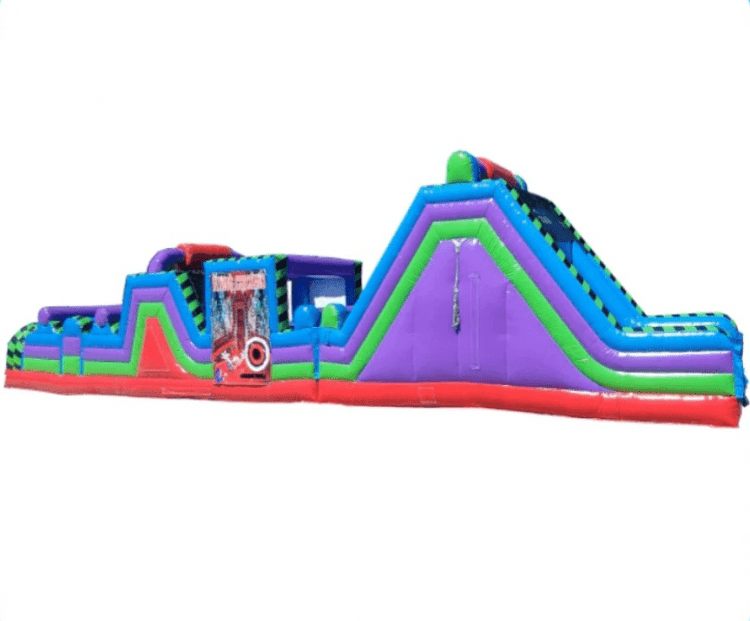
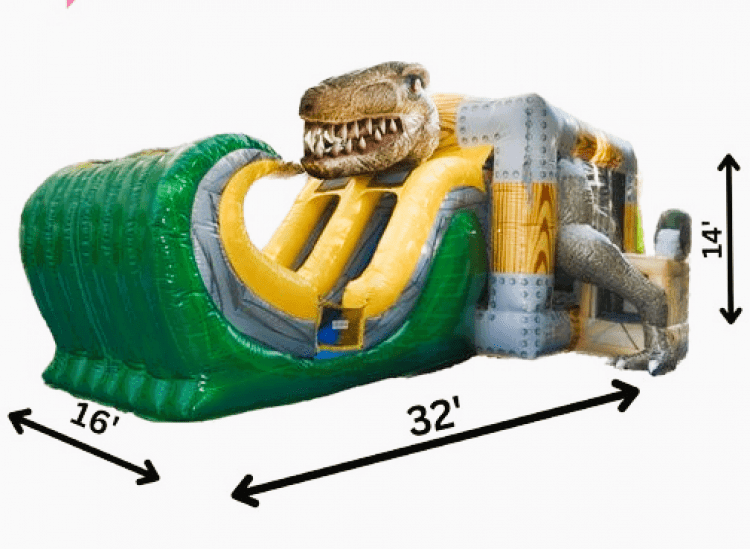
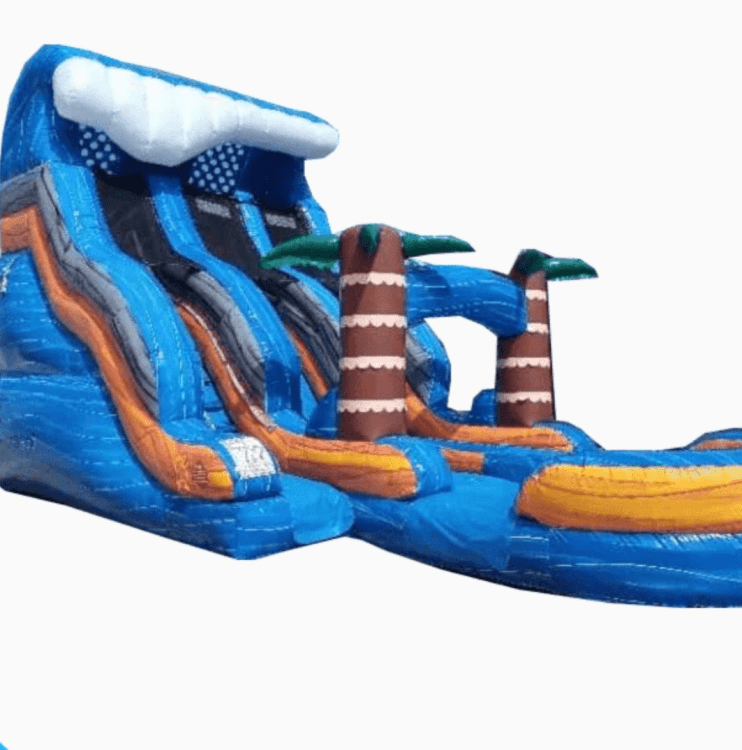
Children ages 9 to 12 can still have a great time in bounce houses, especially in larger units, obstacle courses, or combo inflatables with slides and extra features. At this age, a plain bounce area may feel a little basic for some kids, while more active setups tend to hold attention longer.
The key here is choosing something that matches their energy. Older kids jump harder, move faster, and take up more room. If the inflatable is too small, it can feel crowded or become less safe. This is where unit size and rider limits matter just as much as age recommendations.
Teens and adults
Some inflatables are built for teens or even all-ages use, but not all bounce houses are. Many standard residential-style bounce houses are made with children in mind and are not intended for larger participants. That does not mean older guests cannot join the fun. It just means the inflatable needs to be rated appropriately.
For school events, company picnics, and community festivals, obstacle courses, larger slides, and heavy-duty inflatables are often better choices when teens are part of the crowd. If adults want in too, that should always be confirmed ahead of time rather than assumed.
Why age is only part of the safety picture
When people ask what ages are bounce houses for, they are usually trying to figure out whether an inflatable is safe for their child. That is the right question. But age by itself does not tell the whole story.
Size differences matter a lot. A cautious 7-year-old and a fearless 7-year-old do not move the same way inside a bounce house. A lightweight 8-year-old bouncing next to a much bigger child can still be at risk, even if both fall within the same age range.
Supervision matters too. Even the best inflatable setup needs adults paying attention. Most bounce house injuries happen because of preventable issues like roughhousing, overcrowding, flips, or mixing very small kids with much larger ones. Clear rules and active supervision go a long way.
Setup matters just as much. Proper anchoring, a safe landing area, weather awareness, and following occupancy limits all affect whether the experience stays fun. A clean, well-maintained inflatable and a safety-first rental process are not extras – they are part of the whole package.
Bounce houses for mixed-age parties
Mixed-age parties are common, especially for family birthdays, school events, and community gatherings in Evansville. They can work well, but they need a little planning. If your guest list includes toddlers, grade-school kids, and older siblings, the easiest mistake is letting everyone jump together at once.
A better approach is to separate play times by age or size. Younger children can have a dedicated turn, and older kids can go after them. This keeps the experience more comfortable for little ones and more enjoyable for bigger kids who want room to move.
In some cases, the best answer is not a standard bounce house at all. A combo unit, obstacle course, or larger inflatable attraction may serve a broader age range more effectively. It really depends on the event. A 4-year-old birthday party with a few cousins is different from a church picnic with 60 kids cycling through all afternoon.
How to choose the right inflatable for your child’s age
Start with the guest list, not just the birthday child. If the birthday kid is turning 5 but most guests are 7 and 8, that changes what will work best. Think about the ages, sizes, and energy levels of the children who will actually be using the inflatable.
Next, consider the style of event. For a backyard birthday party, a traditional bounce house or combo inflatable may be perfect. For a school or public event, something with higher throughput, like an obstacle course or larger slide, may keep lines shorter and kids more engaged.
It also helps to ask practical questions before booking. Is the inflatable recommended for your children’s age range? How many riders can be inside at once? Should younger and older kids be separated? Is adult use allowed? A dependable rental company should be ready to answer those questions clearly.
At A Bounce Above Inflatable Rentals LLC, that kind of guidance is part of making party planning easier. Families do not just want something fun – they want something clean, safe, and right for the kids attending.
Signs a bounce house may not be the right fit
Sometimes the best decision is choosing a different inflatable or activity. If most of the children are under 3, a standard bounce house may not be ideal. If the group includes large age and size gaps, one unit may not safely serve everybody at the same time. If you expect teens and adults to participate, you may need a more heavy-duty option.
That is not bad news. It just means the best event setup is the one that fits your crowd, not the one that sounds good in theory. The right choice keeps kids active, keeps parents comfortable, and helps the day run more smoothly.
So, what ages are bounce houses for?
For most events, bounce houses are best for kids ages 3 to 12, with the strongest fit often landing in the 5 to 8 range. But the better answer is this: bounce houses are for children whose age, size, and activity level match the inflatable and can be supervised safely while they play.
If you are planning a party, think less about finding a one-size-fits-all age answer and more about finding the right inflatable for your actual guests. When the unit is clean, properly set up, matched to the age group, and used with good supervision, that is when the real magic happens – happy kids, relaxed parents, and a party that feels easy from start to finish.
The best bounce house is not just the one that looks fun in the photo. It is the one that fits your crowd so well that the only thing you need to manage is who gets the next turn.